Review: Scandinavian Christmas Barn Cross Stitch
As a designer who spends half the year prepping holiday collections and the other half troubleshooting stitch-outs for clients, I have learned that not every cute graphic translates well to thread. We often browse Cross Stitch Patterns or digital Graphics with rose-tinted glasses, imagining the final product before considering the technical reality. When I first opened the Scandinavian Christmas Barn with Snow Cross Stitch Pattern, my immediate reaction was one of cautious optimism. The aesthetic is undeniably charming—clean lines, a cozy Nordic vibe, and a subject matter that screams "holiday comfort." But charm alone does not make a viable product for a craft business or a satisfying project for a hobbyist. I needed to know if this design could hold up under the needle.
The First Impression: Mood and Layout
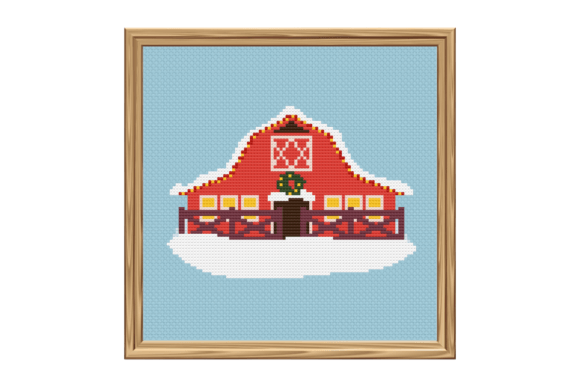
The visual personality of this pattern is distinct. It avoids the cluttered, overly detailed look that plagues many seasonal designs. Instead, it offers a balanced composition where the barn structure serves as the anchor, surrounded by negative space that represents snow. For an embroidery designer, this use of negative space is critical. It means the design breathes. It does not require excessive thread coverage, which keeps the fabric from puckering and reduces production time. The mood is serene and nostalgic, fitting perfectly into the current trend of minimalist holiday decor. It feels less like a loud celebration and more like a quiet winter evening, which appeals to a specific, high-value demographic of buyers looking for understated elegance in their handmade product selections.
Real-World Application: From Digital File to Finished Product
To truly evaluate the Scandinavian Christmas Barn with Snow Cross Stitch Pattern, I mentally placed it into several real-life scenarios. Imagine a custom tote bag design for a local boutique. The simplicity of the barn allows it to stand out on natural canvas or linen without overwhelming the material. Because the design relies on clear shapes rather than intricate shading, it remains legible even from a distance. This is crucial for items like tote bags or aprons, which are often viewed in motion or from across a room.
Consider also its potential in sweatshirt embroidery. Holiday sweaters are a massive market for Etsy sellers and small shop owners. A dense, heavy design can make a sweatshirt stiff and uncomfortable. However, this pattern’s open structure suggests it would sit lightly on fleece or cotton blends. It would work beautifully as a chest pocket accent or a central graphic on a crewneck. The "snow" elements provide texture without requiring thousands of stitches, making it a cost-effective choice for commercial embroidery where margin matters.
For those creating baby embroidery items, such as onesies or nursery wall hangings, the soft, rounded aesthetics of the barn are safe and appealing. Parents often shy away from aggressive or overly complex imagery for infants. This design offers a gentle, storybook quality that fits seamlessly into a modern nursery palette. Whether used on a pillow cover or a kitchen towel, the design maintains its integrity because the core shapes are bold and recognizable.
Technical Considerations and Fabric Compatibility
While the design is versatile, it is not without its constraints. As a reviewer, I must point out where caution is needed. The primary concern with any cross-stitch or pixel-based design is the clarity of the grid on different fabric textures. On even-weave linen or Aida cloth, this pattern will shine. The squares align naturally with the weave, ensuring crisp edges. However, if you attempt to translate this into a machine embroidery design for non-even-weave fabrics, you must pay close attention to stitch density.
If you are adapting this for machine use, be wary of using it on stretchy fabrics like jersey knits without proper stabilization. The geometric nature of the barn requires stability; otherwise, the straight lines may warp during washing. Similarly, on dark fabrics, you must ensure your thread colors have sufficient contrast. The "snow" elements, likely white or light gray, need to pop against the background. I recommend testing the design on scrap fabric first, specifically checking how the lighter threads interact with the base material. If the fabric is too thin, the back of the stitching might show through, disrupting the clean look of the barn.
Another critical area is the corners of the barn roof and the snow drifts. In cross stitch, these are easy to manage. In machine embroidery, sharp corners can cause thread bunching if the digitizing is not precise. If you are purchasing this as a digital asset for commercial use, verify whether it includes optimized files for various hoop sizes. A design that looks perfect in a 5x7 hoop might lose detail if scaled down too small for a cap or a tiny embroidered patch.
Enhancing Brand Value and Customer Trust
From a business perspective, the Scandinavian Christmas Barn with Snow Cross Stitch Pattern contributes positively to brand consistency. It projects professionalism. Sloppy, overly complex designs often signal amateurism, whereas clean, well-proportioned graphics suggest a curated eye. Using this design in your small shop product lineup can help elevate the perceived value of your items. Customers trust products that look intentional and well-executed.
Furthermore, this design is highly "giftability" focused. It evokes emotion. When a customer buys a personalized gift featuring this barn, they are buying a feeling of warmth and tradition. This emotional connection drives engagement and repeat business. For digital product sellers, offering this as part of a holiday bundle can increase average order value. It serves as a strong design asset for creating printable mockup previews that look stunning on social media, driving traffic to your listings.
Practical Designer Notes for Best Results
Before you commit to a large batch of custom apparel or holiday gifts, take these practical steps. First, confirm the licensing terms. The product description mentions a PDF with instructions, but it does not explicitly state commercial rights. Always clarify this with the creator before selling finished product items. Second, if you are stitching by hand, count your threads carefully. The charm of this design lies in its symmetry. A single misplaced stitch in the barn’s window or roofline can disrupt the entire visual balance.
If you are digitizing this for machine use, consider using a combination of fill stitch for the barn walls and satin stitch or running stitch for the outlines and snow details. This variation adds depth and prevents the design from looking flat. Test different stabilizer types; a cut-away stabilizer might be overkill for a lightweight tote, while a tear-away might not provide enough support for a dense jacket. Finally, view your test stitch-out in black and white. If the design loses its definition without color, you may need to adjust the contrast or spacing between elements.
In conclusion, the Scandinavian Christmas Barn with Snow Cross Stitch Pattern is a strong contender for your holiday repertoire. It balances aesthetic appeal with technical feasibility. It respects the crafter’s time and the end-user’s desire for quality. Whether you are an appliqué design enthusiast or a traditional cross-stitcher, this pattern offers a reliable, charming foundation for your next creative venture. Just remember to respect the materials, check your specs, and let the simplicity of the design do the heavy lifting.