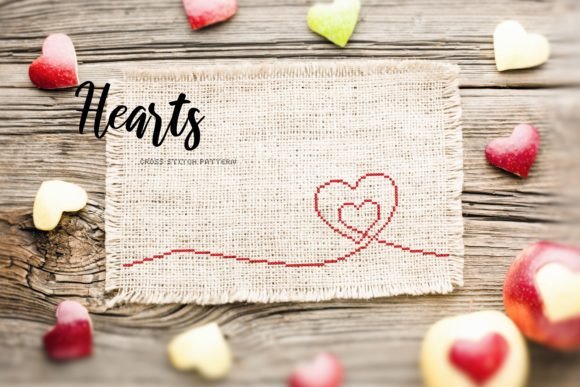
Hearts Cross Stitch Pattern Review for Business
As an embroidery designer who has spent years helping small businesses translate their brand identity into tangible, stitched assets, I approach every new machine embroidery design with a critical eye. It is not enough for a graphic to look cute on a screen; it must perform under the needle, withstand wear and tear, and communicate professionalism. Today, I am reviewing Hearts. Cross Stitch Pattern, a compact digital asset that holds surprising potential for branded merchandise and custom apparel.
The product description highlights its utility as a border for tablecloths or festive napkins, noting a design size of 126 x 35 stitches and the use of a single thread color from the DMC palette. While this sounds simple, simplicity is often where true branding power lies. For boutique owners, café managers, and Etsy sellers, this digital embroidery file offers a streamlined way to add a touch of handmade warmth to commercial products without the complexity of multi-color runs.
First Impressions: Professional Simplicity
When I first loaded Hearts. Cross Stitch Pattern into my digitizing software, the immediate impression was one of understated elegance. The cross-stitch aesthetic inherently carries a rustic, handmade vibe that resonates deeply with modern consumers seeking authenticity. Unlike complex, high-density logos that can feel cold or corporate, this design feels approachable and friendly.
The fact that it utilizes only one thread color is a significant advantage for small business owners managing inventory. It reduces production time and minimizes thread breaks, which is crucial when running large batches of custom apparel or promotional items. The visual personality is classic yet decorative, striking a balance between playful and premium. It does not scream for attention but rather invites a closer look, which is exactly what you want for subtle brand accents.
Real-World Applications for Small Business Merch
The versatility of Hearts. Cross Stitch Pattern extends far beyond the suggested tablecloth borders. In my experience, small linear designs like this are incredibly valuable for creating cohesive brand ecosystems. Here is how I envision this design performing in real business scenarios:
- Apron Embroidery: For bakeries, florists, and coffee shops, staff uniforms are walking billboards. Placing this heart motif on the chest pocket or along the hem of an apron adds a layer of care and craftsmanship to the employee’s presentation. It signals to customers that the service is personal and attentive.
- Tote Bag Design: Retailers often sell branded tote bags as eco-friendly alternatives to plastic. A small, repeated pattern of these hearts along the bottom edge or handle attachment points creates a sophisticated finished product that customers will actually want to reuse, extending your brand visibility.
- Cap Embroidery: While curved surfaces are tricky, a design of this stitch count (126 x 35) is small enough to fit neatly on the side panel of a baseball cap or the brim of a bucket hat. It serves as a subtle identifier for staff or loyal customers without overwhelming the garment.
- Product Packaging Accents: Imagine sewing this patch onto fabric gift bags or using it as a seal on tissue paper for high-end boutique items. It elevates the unboxing experience, turning a standard transaction into a memorable moment.
- Etsy Branding: For handmade sellers, including a small item with this embroidered detail—such as a keychain or a pin cushion—can serve as a "thank you" gift. This builds customer trust and encourages repeat business through thoughtful engagement.
Navigating Technical Constraints
While Hearts. Cross Stitch Pattern is versatile, it is not without its technical considerations. As a designer, I must advise caution regarding scale and fabric choice. The design is categorized under Cross Stitch Patterns and Graphics, which implies a pixelated or grid-based aesthetic. This style relies on clear definition between stitches.
If you attempt to shrink this design too much for a tiny lapel pin or a delicate jewelry tag, the individual crosses may merge, losing their distinct shape. Conversely, expanding it too largely without adjusting the stitch density could result in a loose, gap-filled appearance that looks unprofessional. Always check the recommended hoop size provided by the creator before resizing.
Fabric texture also plays a pivotal role. On smooth cottons or linens, the cross-stitch effect will be crisp and clean. However, on textured fabrics like heavy denim, fleece, or terry cloth, the details might get lost. In such cases, using a cut-away stabilizer is non-negotiable to prevent puckering and ensure the stitches sit flat against the material. For dark uniforms, ensure you select a high-contrast thread color to maintain visibility.
Impact on Brand Identity and Customer Trust
In the world of commercial embroidery, consistency is key to building brand recognition. Hearts. Cross Stitch Pattern contributes to a brand identity that values tradition, care, and detail. When customers see consistent, high-quality stitching across your aprons, packaging, and merchandise, it subconsciously reinforces the quality of your primary products.
This design helps bridge the gap between mass-produced goods and artisanal craft. It tells a story of human involvement. For a local business, this differentiation is vital. It transforms a simple napkin or shirt into a handmade product artifact, increasing perceived value. Customers are more likely to engage with and share photos of items that feel unique and thoughtfully designed, driving organic marketing for your brand.
Practical Designer Notes for Production
Before you commit to a full production run using Hearts. Cross Stitch Pattern, follow these essential steps to ensure success:
- Test in Black and White: Before selecting your brand colors, stitch the design out in black thread on white fabric. This allows you to evaluate the clarity of the cross-stitch structure without the distraction of color. If it looks muddy in monochrome, it will not work in color.
- Verify Commercial Licensing: The product description mentions it is a graphic pattern, but always confirm the license terms. Ensure you have the right to use the embroidery file for physical goods intended for sale, not just for personal hobby projects.
- Create a Printable Mockup: Use digital tools to place the design on images of your actual products—aprons, caps, or totes. Show these mockups to stakeholders or even focus groups to gauge reaction before stitching a single thread.
- Check Thread Contrast: Since the design uses one color, the choice of thread is critical. Test your specific brand threads against your fabric swatches. DMC is standard, but if you switch brands, ensure the sheen and weight are compatible with the stitch count.
- Inspect Spacing and Density: Run a test stitch-out on the actual fabric you plan to use. Check for pulls or gaps. Adjust tension if necessary. This step saves costly mistakes during large batch production.
In conclusion, Hearts. Cross Stitch Pattern is a robust asset for the small business owner looking to add a layer of artisanal charm to their merchandise. It is not just a decorative element; it is a strategic tool for enhancing brand identity. By respecting its technical limits and leveraging its aesthetic strengths, you can create design assets that resonate with customers and stand the test of time. Whether used on a festive napkin or a staff uniform, this design proves that small details make a big impact in the world of branded embroidery.