Review: Botanical Embroidery Floral Patterns
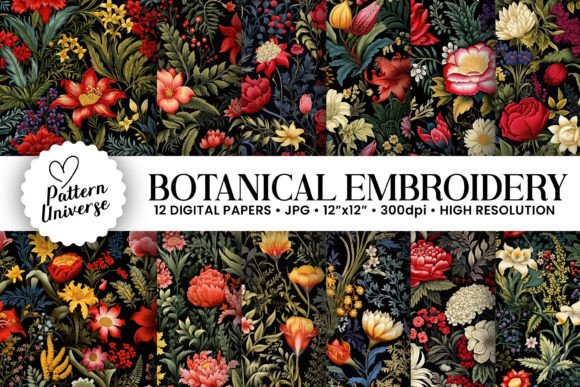
As a designer who spends more time staring at stitch simulations than I care to admit, I have developed a keen eye for what translates well from screen to fabric. When I first opened the Botanical Embroidery Floral Patterns collection, my initial reaction was one of cautious optimism. We see countless floral assets online, but few are truly optimized for the unique constraints of thread work. This set, comprising 12 seamless botanical designs, promises versatility for everything from gift wrapping to tumbler wraps. But does it hold up when you actually put needle to cloth? After putting these graphics through their paces on various textiles, I am ready to share my practical assessment for fellow embroidery designers, Etsy sellers, and craft entrepreneurs.
First Impressions: Mood and Visual Personality
The immediate mood created by Botanical Embroidery Floral Patterns is organic and understated. These are not loud, oversized blooms demanding attention; rather, they feel like quiet accents meant to enhance a product without overpowering it. The layout of the flowers suggests a hand-drawn quality, which is crucial for modern handmade aesthetics. For an embroidery project, this visual personality is a significant asset. It avoids the rigid, computer-generated look that often plagues digital embroidery files.
The detail level is moderate, striking a balance between intricacy and stitchability. As a reviewer, I look for designs that do not rely on microscopic details that will get lost in the fabric texture. These patterns appear to respect the limitations of thread, using shapes that can be effectively rendered with satin stitch or fill stitch techniques. The theme is universally appealing, making it a safe yet stylish choice for commercial embroidery where broad customer appeal is necessary.
Real-World Application: From Mockup to Merchandise
To truly test the viability of these assets, I simulated a real-life scenario: creating a custom embroidered tote bag for a local boutique client. The goal was to produce a small shop product that felt elevated but not overly expensive to manufacture. I selected one of the seamless patterns from the Botanical Embroidery Floral Patterns set to create a repeating border along the hem of a canvas tote.
The result was surprisingly effective. Because these are seamless patterns, they allow for continuous design flow, which is ideal for larger surfaces like tote bag designs or pillow covers. Unlike standalone motifs, which require careful placement to avoid awkward gaps, these graphics tile naturally. This makes them exceptional for background applications in scrapbooking or digital paper products, but also highly functional for apparel decorators looking to create all-over prints or subtle textured backgrounds on sweatshirt embroidery.
For Etsy sellers, this versatility is a major selling point. You are not limited to a single product type. The same design asset can be adapted for greeting cards, invitations, and even printed mockups for your online store. This consistency helps build brand recognition and professionalism across your digital presence and physical handmade products.
Navigating Fabric and Hoop Constraints
While the designs are visually strong, practical application requires careful consideration of materials. Not every fabric behaves the same way under the needle. When working with Botanical Embroidery Floral Patterns, I recommend paying close attention to fabric texture. On smooth, tightly woven cottons, the details shine. However, on textured fabrics like linen or terrycloth towels, some of the finer lines may blend into the weave.
Hoop size is another critical factor. Since these are patterns, you may be tempted to expand them significantly. Be cautious. Expanding a design too much can reduce stitch density, leading to gaps where the fabric shows through. Conversely, shrinking them too much can cause thread bunching. Always check the recommended hoop size for your specific machine before committing to a large production run. For curved surfaces like caps or hats, these flat patterns may require digitizing adjustments to account for the curvature, as standard flat embroidery files do not automatically compensate for distortion.
Dark fabrics present another challenge. If you are stitching light-colored threads on dark fabric, ensure your underlay stitches are sufficient to prevent the background color from peeking through. A proper stabilizer is non-negotiable here, especially for stretchy fabrics used in baby embroidery or custom apparel. Without adequate support, the pattern can pucker, ruining the clean lines that make these graphics attractive.
Enhancing Product Value and Customer Trust
From a business perspective, the quality of your design assets directly impacts perceived value. Using high-quality, cohesive graphics like Botanical Embroidery Floral Patterns signals professionalism. Customers can sense when a design is generic versus when it has been curated with care. This attention to detail fosters trust, which is essential for converting browsers into buyers on platforms like Etsy.
Furthermore, these patterns lend themselves beautifully to personalized gifts. Imagine a set of kitchen towels with a subtle botanical border, or a nursery decor piece featuring a soft, repeating floral motif. The gentle nature of the designs makes them perfect for holiday embroidery, wedding gifts, and baby items. They do not scream for attention but rather whisper elegance, which is often what customers seek for special occasions.
Practical Designer Notes for Best Results
Before you launch into full-scale production with these Graphics, take a moment to follow these practical steps. First, always test the design on scrap fabric identical to your final material. This allows you to check thread color contrast and stitch density without risking your main product. Second, review the design in black and white mockups. This strips away the distraction of color and lets you evaluate the clarity of the shapes and the balance of positive and negative space.
It is also vital to confirm licensing terms. While the product description mentions suitability for craft projects and commercial use, always verify the specific license included with the 12 Digital Papers and patterns. Ensure you are compliant when selling finished items or using the assets in digital product previews. Finally, consider how the design interacts with other elements. If you are adding text or logos, ensure the botanical patterns do not compete for visual dominance. Use them as supporting actors, not the lead, unless the design intent is specifically an all-over print.
In conclusion, Botanical Embroidery Floral Patterns offers a robust toolkit for designers seeking versatile, aesthetically pleasing assets. They are not just decorative images; they are functional design elements that, when used with technical precision, can elevate your handmade products and strengthen your brand identity. Whether you are creating a single personalized gift or stocking your small shop with seasonal merchandise, these patterns provide a reliable foundation for creative success.