Review: Green Mandala Cross Stitch Pattern PDF
As a designer who has spent years evaluating digital assets for both personal craft and commercial production, I approach every new Cross Stitch Patterns download with a critical eye. It is not enough for a design to look pretty on a screen; it must hold up under the needle, translate well to fabric, and resonate with the end user. Recently, I evaluated the Green Mandala Cross Stitch Pattern PDF, a piece of Graphics that promises a blend of meditative symmetry and botanical calm. Here is my practical assessment of how this design performs in real-world embroidery scenarios.
First Impressions and Visual Personality
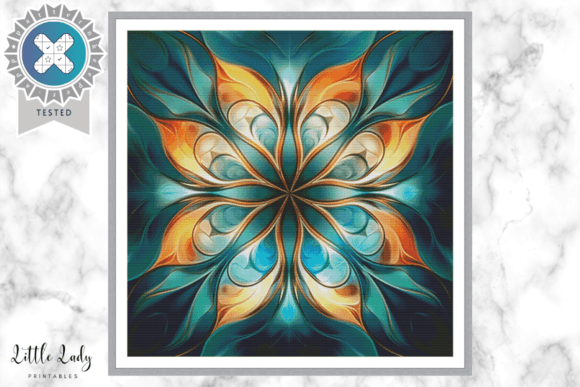
The immediate appeal of the Green Mandala Cross Stitch Pattern PDF lies in its balanced composition. Mandalas can often feel cluttered or overly complex when reduced to a grid, but this design maintains a clear visual hierarchy. The use of green tones suggests growth, tranquility, and nature, making it an excellent candidate for projects intended to soothe or inspire. The symmetry is precise, which is crucial for cross stitch, where any deviation in counting becomes glaringly obvious.
From a design perspective, the layout feels organic despite its geometric roots. It does not scream for attention but rather invites a closer look. This subtlety is a strength for high-end handmade products, where understated elegance often commands a higher price point than loud, busy designs. The mood is serene, fitting perfectly into the current trend of mindful crafting and slow living.
Real-World Application: The Custom Tote Bag Test
To test the viability of this pattern, I envisioned a specific project: a custom embroidered tote bag for a local boutique specializing in eco-friendly goods. The goal was to create a handmade product that felt artisanal yet professional. The Green Mandala Cross Stitch Pattern PDF proved to be an ideal choice for this application.
Because the design is centered and symmetrical, it anchors the front of a canvas bag beautifully. Unlike asymmetrical applique design elements that might drift visually on a large surface, the mandala holds its ground. When stitched onto a natural linen or heavy cotton canvas, the green threads pop against the neutral background, creating a sophisticated contrast. This is not just a hobbyist project; it is a viable small shop product that could easily feature in an Etsy seller’s inventory or at a craft fair.
The included files support this workflow efficiently. The PDF contains a pattern mockup, a black and white symbol chart, a symbol key, and a floss usage summary specifically for 14-count fabric. This level of detail is essential for planning material costs and time estimates, which are critical for any craft business owner. The ability to use the PDF with the Pattern Keeper app is a significant bonus for modern stitchers who prefer digital markup over paper charts, streamlining the production process.
Material Considerations and Stitching Clarity
While the design is robust, its success depends heavily on material selection. The floss usage summary indicates requirements for 14-count fabric, which is a standard medium weight. However, when adapting this for different textiles, caution is required. On textured fabrics or loose-weave linens, the finer details of the mandala might lose definition. For a crisp finished product, I recommend using a high-quality Aida cloth or evenweave fabric with a consistent thread count.
If you are considering this for custom apparel, such as a sweatshirt or t-shirt, be mindful of the fabric stretch. Cross stitch on knitwear requires careful stabilization to prevent distortion. The stitch density of a mandala can be moderate to high depending on the size, so using a cut-away stabilizer is advisable to maintain the shape of the design after washing. For baby embroidery items, ensure the back of the stitching is clean and covered, as sensitive skin may be irritated by loose threads or knots.
The black and white symbol chart provided in the PDF is particularly useful for checking contrast before you begin. I always advise designers to print this chart and view it from a distance. If the symbols blur together, the design may be too dense for smaller hoop sizes or lower resolution fabrics. In this case, the spacing appears adequate for clarity, ensuring that each element of the mandala remains distinct.
Commercial Viability and Brand Consistency
For commercial embroidery and digital product sellers, the versatility of the Green Mandala Cross Stitch Pattern PDF is a major asset. It fits seamlessly into brands focused on wellness, yoga, nature, or mindfulness. Whether used for holiday embroidery gifts, wedding favors, or personalized gift items, the design carries a universal appeal that transcends seasonal trends.
However, professionalism is key. Before selling finished items, you must confirm the licensing terms associated with the download. While many designers allow the sale of physical finished goods, restrictions often apply to digital redistribution. Always verify these details to protect your craft business from legal issues. Additionally, consider creating printable mockup images of your finished pieces to showcase the design in context. High-quality photos of the stitched mandala on a pillow cover or wall hanging can significantly boost buyer engagement and trust.
Practical Designer Notes
Before committing to a full production run or a large project, follow these practical steps:
- Test on Scrap Fabric: Always stitch a small section of the mandala on your chosen material to check thread tension and color interaction.
- Check Thread Contrast: Ensure your selected green shades have enough variation to distinguish the layers of the mandala. Flat lighting can hide subtle differences, so test in natural light.
- Confirm Hoop Size: Calculate the final dimensions based on the stitch count and fabric gauge. Ensure the design fits comfortably within your hoop without being cramped.
- Inspect Small Details: Look closely at the symbol key. Complex curves in mandalas can sometimes result in jagged edges if not mapped correctly on the grid. The provided chart should be reviewed for smoothness.
- Stabilizer Selection: For garments like caps or curved surfaces, use appropriate stabilizers to prevent puckering. This design works best on flat or gently curved areas.
In conclusion, the Green Mandala Cross Stitch Pattern PDF is a well-executed asset for designers and makers. It offers a balance of aesthetic beauty and technical practicality. When used with the right materials and attention to detail, it elevates simple embroidery project ideas into valuable, marketable goods. Whether you are an experienced Etsy seller or a hobbyist looking for a meaningful personalized gift, this design provides a solid foundation for creative expression.