Reviewing Christmas Book Lover Embroidery Patterns
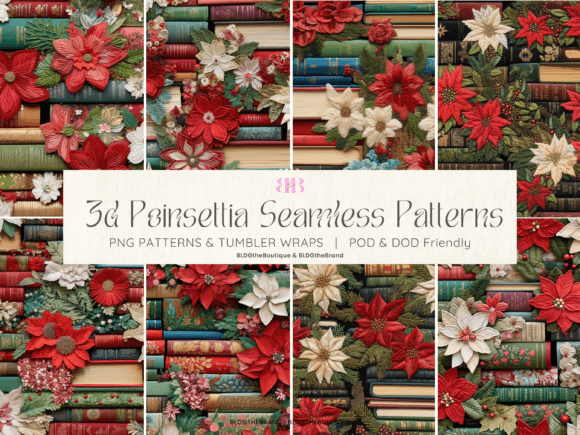
As a designer who spends more time staring at stitch simulations than I care to admit, I approach new machine embroidery design releases with a mix of curiosity and skepticism. We have all seen the flood of holiday-themed assets that look charming on a screen but turn into a tangled mess under the needle. However, when I recently evaluated the Christmas Book Lover Embroidery Patterns, my perspective shifted from caution to genuine interest. This is not just another seasonal clipart dump; it is a curated collection of eight seamless patterns designed specifically for those who understand that books and holidays are inextricably linked.
The first impression is one of cozy sophistication. The mood created by these Graphics is warm, intellectual, and distinctly festive without relying on the usual clichés of snowmen or generic trees. For an embroidery designer, the layout and visual personality are crucial. These patterns feature repeating motifs that suggest stacked books, reading glasses, perhaps a cup of tea, and subtle holiday accents. The detail level is balanced, avoiding the extreme density that often plagues small-scale repeats. This makes them versatile enough for various applications, from a subtle background on a tote bag to a bold statement on a holiday apron.
Real-World Application: The Custom Tote Bag Test
To truly understand the value of any embroidery file, you must visualize it on a physical product. I imagined using these patterns for a custom order: a canvas tote bag for a local independent bookstore’s holiday promotion. The client wanted something that screamed "gift for the reader" but remained elegant enough for daily use. Here, the seamless nature of the Christmas Book Lover Embroidery Patterns shines. Unlike a single central motif, a seamless pattern can be tiled to cover a larger area or used as a border element.
In this scenario, I would likely scale the pattern to create a subtle all-over print effect on the fabric before cutting, or use a section of the repeat as a wide band across the bottom of the bag. The thread colors chosen here matter immensely. Imagine deep forest greens, rich burgundies, and warm golds against a natural cream canvas. The result is a handmade product that feels boutique-quality rather than mass-produced. Customers reacting to such an item are not just buying a bag; they are buying into an identity—the identity of the thoughtful, well-read individual. This emotional connection drives sales for Etsy sellers and small shop product creators alike.
Versatility Across Product Lines
Beyond tote bags, these Patterns offer significant flexibility for custom apparel. Consider sweatshirt embroidery. A full-front all-over print might be too dense for comfort, but placing a scaled-down version of the pattern on the sleeve or as a pocket accent adds a layer of refined detail. For baby embroidery, one must be cautious. While the theme is lovely, the complexity of book spines and small text elements might not hold up well on soft, stretchy baby fabrics unless the stitch count is optimized. However, for a nursery decor item like a pillow cover or a blanket border, these designs could create a whimsical, storybook atmosphere perfect for holiday gifts.
For commercial embroidery projects, such as branded merchandise for cafes or libraries, the professional presentation of these designs is a major asset. They allow for brand consistency while tapping into the seasonal market. Whether used for embroidered patch designs or as part of a larger applique design composition, the clean lines ensure that the final product looks crisp and intentional.
Technical Considerations and Fabric Choices
No design is universal, and practical judgment requires knowing where to exercise caution. When working with Christmas Book Lover Embroidery Patterns, pay close attention to stitch density. Seamless patterns can quickly become heavy if tiled too closely. On textured fabrics like wool or thick linen, the stitches may sink in, losing definition. In such cases, using a cutaway stabilizer is non-negotiable to support the weight of the thread.
Conversely, on thin or stretchy fabrics, high-density fills can cause puckering. I recommend testing the design on scrap fabric first. Check how the satin stitch edges hold up against the fill stitch backgrounds. If the pattern includes tiny lettering or intricate corners, ensure your machine can handle the precision. Small details often get lost in translation from digital file to thread, especially on curved surfaces like caps or hats. For dark fabric, consider using a lighter underlay or choosing thread colors with high contrast to maintain stitching clarity.
Another critical factor is washability. Items like kitchen towels or aprons will undergo frequent laundering. Dense embroidery can stiffen fabric, so balancing aesthetic appeal with tactile comfort is key. Always verify the recommended hoop size for your specific machine. While these are digital repeats, the initial digitizing must accommodate standard hoops without excessive jumping or trimming.
Enhancing Brand Value and Customer Trust
From a business perspective, the quality of your design assets directly impacts customer trust. A sloppy embroidery job suggests a lack of care, whereas a clean, well-executed pattern signals professionalism. Using high-quality digital embroidery file sources like this set helps maintain that standard. When customers see a well-stitched tote bag design or a neat sweatshirt embroidery piece, they perceive higher value. This perception allows for better pricing power and increased buyer engagement.
Moreover, these patterns serve as excellent printable mockup elements for online listings. Even if you are selling the finished item, showing the design in context helps customers visualize the personalized gift potential. It bridges the gap between digital browsing and physical ownership.
Practical Designer Notes for Implementation
Before committing to a large production run or listing these on your shop, follow these practical steps:
- Test on Scrap Fabric: Always stitch out a sample on the exact fabric type you intend to use. This reveals issues with tension, density, and registration.
- Check Thread Contrast: View your design in black and white to ensure the elements distinguish themselves clearly without relying solely on color.
- Review Stitch Density: If the pattern feels too stiff, consider reducing the density in your editing software or increasing the scale.
- Confirm Hoop Size: Ensure the repeat fits comfortably within your available hoop dimensions to minimize re-hooping errors.
- Inspect Small Details: Zoom in on the digitized file to check for stray stitches or poorly defined corners that might cause thread breaks.
- Verify Licensing: Before selling finished items or using these in commercial products, confirm the license terms provided with the Christmas Book Lover Embroidery Patterns. Understanding whether you can sell the physical embroidered goods or if there are restrictions is vital for legal compliance.
In conclusion, this set offers a refreshing take on holiday embroidery. It moves beyond the superficial to tap into a niche audience of readers and thinkers. For the craft business owner, it provides a unique angle in a saturated market. By respecting the technical limitations of embroidery and leveraging the aesthetic strengths of these Graphics, you can create finished product lines that are both beautiful and commercially viable. Whether for a wedding gift, a boutique display, or a personal embroidery project, these patterns deserve a spot in your library. Just remember: the magic lies not just in the design, but in the careful execution.